
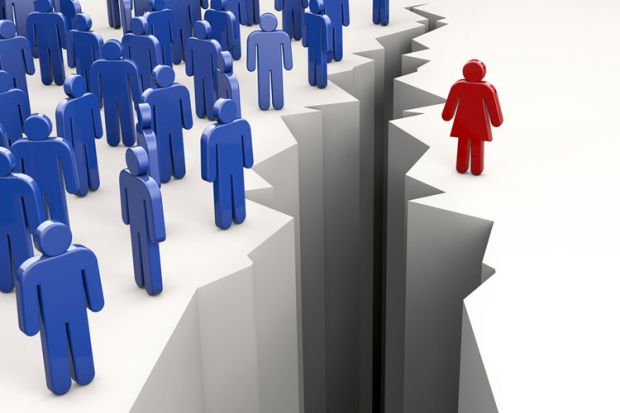
When I saw a news article saying “Boys not only perform better in maths, they are also more confident about the subject than girls“, I seriously just took a sip of my coffee and said “Poor boys are feeling inferior again, so they’re using small factor statistics to put women down.”
They do not look at the fact that for the last ten years women have scored 4-22% higher scores in maths at university level. They don’t mention that this one disparancy is of a single age group, not all of them. No, no, no, guess what ladies, we are apparently all bad at maths and sciences and should instead just read novels and not interfere with man’s serious work! Their article was immediatly debunked by leading Universities, but think of the damage it does on the young impressionable girls picking their career paths? Seeing articles like this, can make them doubt their abilities and damage their self confidence!

“Boys do not pursue mathematical activities at a higher rate than girls because they are better at mathematics. They do so, at least in part, because they think they are better.” Shelley Correll, Professor of Sociology, Stanford University.
The articles cause women to not pursue these opportunities and cause damage to the needed equality to stop the gender gap in sciences. This isn’t the first time that men have made this idiotic statement, we have it every 10 or so years. Is anyone questioning why they are only bragging 1 out of 10 years? Anyone else thinking the shoe was on the other foot for the other 9 years?
To further argue my point, this article focuses only on girls at the age of 15. I don’t know about you, but at 15, I was way more interested in social activities. Going out, having fun. Yep, school work suffers, but then look at the test scores for the girls looking at university, only 2 years later and what do you know, that apparent gap you are talking about has suddenly disappeared, actually gone the other way due to the boys going through distracted phases in their development. At 15 girls also are going through the huge nightmare of puberty and unlike the often complaining men who only have to deal with the odd impromptu tent in the pants, girls get huge surges of hormones affecting their moods, also causing them pain each month and growing breasts which makes them self conscious and filled with self doubt. Perfect time for a test! Wonder why they don’t do better, hmmm?
I saw another article which said that men can withstand more pain than a woman. When asked about the fact women give birth, men said that that didn’t apparently count as that was what women were built for! Yep, apparently we’ve just been imagining it, man has spoken! I sometimes daydream that sexism doesn’t exist anymore, but they keep proving me wrong…

The people writing and reading the sexist and biased articles have made idiots of themselves by not bothering to look at the entirety and instead reporting on a tiny irregularity in a single point of time. Statistics need to be used with care, not self serving opinions. Oh wait, they keep doing it… Next week I’m going to write an article saying that “90% of women have bigger biceps then men”? Then we can giggle as we watch them pick up rulers and start measuring. I won’t be lying, as I’m sure I can find a small town holding female muscle building contest and say the study was based off of that single factor… See how easy you can make a statistic work in your favour?

As Roman consul Marcus Porcius Cato (234–149 BC) said, “As soon as they begin to be your equals, they will have become your superiors!” and guess what… It is true and men have been terrified of women ever since.
Women have had significant impacts in the sciences, mathematics and technology fields, please clink on links for more information (these are just a few better known ones, there are millions, even if they weren’t made famous for their contributions).
- Ada Lovelace (1815-1852) – first computer programmer, ever in history and wrote the first algorithm intended to be processed by a machine.
- Chien-Shiung Wu (1912-1997) – leading work in nuclear physics, known for her work on beta decay.
- Dorothy Hodgkin (1910-1994) – known for chemistry and determining the structures of penicillin, vitamin B12, and insulin.
- Emmy Noether (1882-1935) – made important contributions to abstract algebra and proved Noether’s theorems, which are fundamental in physics and mathematics.
- Julia Robinson (1909-1985) -known for her contributions to computability theory and computational complexity.
- Marie Curie (1867-1934) – first person to win two Nobel Prizes in different scientific fields – Nobel Prize in Physics and the Nobel Prize in Chemistry.
- Maryam Mirzakhani (1974-2017) – the first woman to be awarded the Fields Medal, one of the highest honors in mathematics.
- Rosalind Franklin (1920-1958) – work on X-ray diffraction of DNA which was crucial to understanding the structure of DNA.
- Sophie Germain (1776-1831) – contributed to number theory, acoustics, and elasticity, studied at a male-only mathematics academy by posing as a male student (only way she could get the education she deserved).
Nobel Prize Winners –
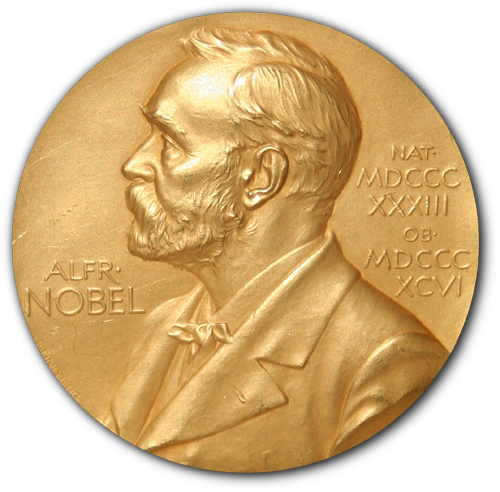
19 women have won the Nobel Peace Prize (16.3% of 110 awarded)
18 have won the Nobel Prize in Literature (15% of 120 awarded)
13 have won the Nobel Prize in Physiology or Medicine (5.6% of 230 awarded)
8 have won the Nobel Prize in Chemistry (4.1% of 191 awarded)
5 have won the Nobel Prize in Physics (1.8% of 224 awarded)
3 (Elinor Ostrom, Esther Duflo and Claudia Goldin) have won the Nobel Memorial Prize in Economic Sciences (2.17% of 92 awarded)
The most recent women to be awarded a Nobel Prize were Han Kang in Literature (2024), Claudia Goldin in Economics, Narges Mohammadi for Peace, Anne L’Huillier in Physics and Katalin Karikó in Physiology or Medicine (2023).
For further information please see –
Association for Women in Mathematics (AWM): A professional society whose mission is to encourage women and girls to study and have active careers in the mathematical sciences.
Organization for Women in Science for the Developing World (OWSD): This international organization, founded in 1987, focuses on providing research training, career development, and networking opportunities for women scientists in developing countries.
Association for Women in Science (AWIS): Founded in 1971, AWIS is a national advocacy organization that champions the interests of women in STEM fields, addressing issues like job discrimination and professional isolation.
 Maxine the Magnificent