
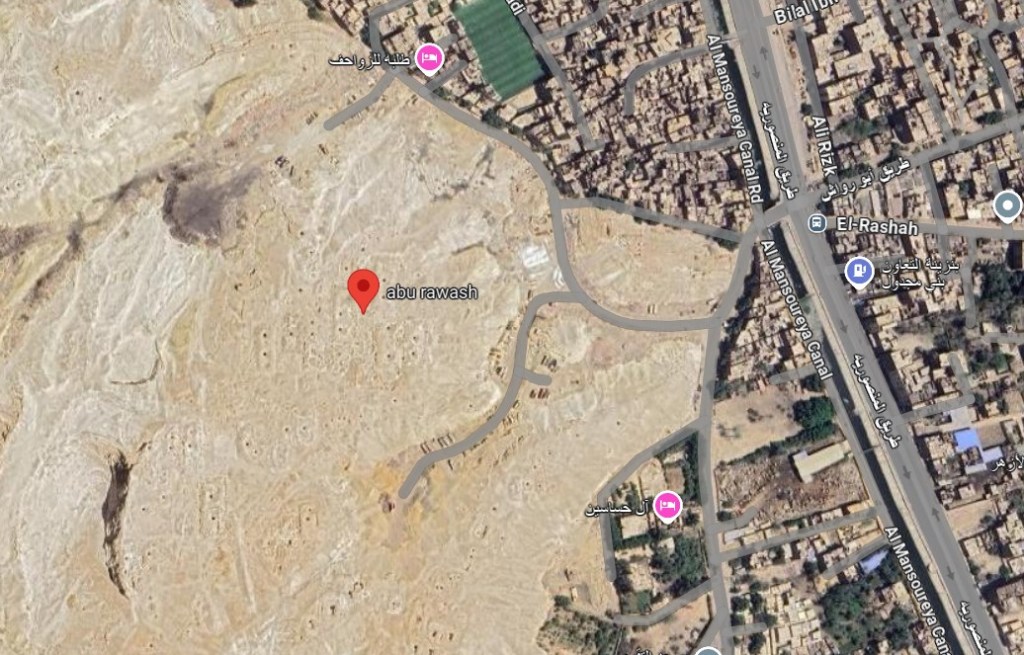
Location – Egypt (at the northern edge of the great Egyptian necropolis of Memphis, about 8 km northwest of the Giza Plateau)
Coordinates – 30.04034, 31.09242
Built by – Redjedef (third king of the 4th dynasty of ancient Egypt who ruled c. 2482–c. 2475 bce)
Structure – At Abu Rawash, Redjedef started a pyramid about the size of the pyramid of Menkaure, but it was never completed. Granite blocks of its casing have been found, together with the remains of a funerary temple with granite columns. The king also worked the diorite quarries in Nubia (the modern Sudan) near Abu Simbel, where his name occurs. He seems to have ruled for just eight years and was succeeded on the throne by his brother.
Unlike the fourth dynasty mastabas of Giza which sit very close to the pyramids and seem to have been built to a plan in advance, the fourth dynasty necropolis at Abu Rawash (cemetery F) lies some distance from Djedefre’s pyramid and the mastabas seem to have been built to order and laid out in a more haphazard manner. There are also a number of burials dating to the fifth and sixth dynasties and a smaller number dating to the Middle Kingdom.
Most of the mastabas are composed of external walls made up of large blocks layered around a bedrock core with the upper sections filled in with loose masonry. On the east side there is a cult niche to the north and a L-shaped chapel to the south. Some of the southern chapels have brick annexes to extend them. Many of the tombs are anonymous but some bear the names of their owners and some artifacts have been recovered also bearing these names; for example an alabaster offering table dedicated to Hornit.

Discoveries –Petrie later examined the pyramid in the 1880s. However, only at the beginning of the 20th Century was this pyramid systematically investigated, first by French archaeologist Emile Chassinat, and about then years later, by his fellow countryman Pierre Montet. Later still, it was further investigated by Maragioglio and Rinaldi. In 1995, the French-Swiss team headed by Michel Valloggia began excavation at the site, and perhaps this modern effort will answer questions about the pyramid.
During routine excavation works at the Archaic period cemetery located at Abu Rawash area northeast of the Giza Plateau, a French archaeological mission from the French Institute of Oriental Archaeology in Cairo stumbled on what is believed to be a funerary boat of the First Dynasty King Den. The funerary boat was buried with royalty, as ancient Egyptians believed it would transfer the king’s soul to the afterlife for eternity.
More Information
https://www.britannica.com/place/Abu-Ruwaysh
https://en.wikipedia.org/wiki/Abu_Rawash
https://mysterieszone.wordpress.com/ancient-mysteries/ancient-egypt/abu-rawash/
Videos
Abu Rawash: Mysterious Remains Of An Ancient Pyramid IN Egypt – 10 minutes
Archaeologists Discover What’s Inside Mysterious Pyramid at Abu Rawash – 7 minutes
The Mystery of the Lost Pyramid of Abu Rawash I SLICE HISTORY | FULL DOCUMENTARY – 46 minutes
The Mystery of Abu Rawash: Was it REALLY an Egyptian Pyramid? | Ancient Architects – 19 minutes
The Destroyed Pyramid Of ABU RAWASH | Ancient Presence – 10 minutes
Lost Ancient Technology: Inside Egypt’s Abu Rawash Pyramid – 10 minutes
King Djedefre and the Mystery Surrounding His Pyramid in Abu Rawash – 14 minutes
 Maxine the Magnificent